
NovAbyss field notes · 6 minute read
Freshwater aquarium equipment checklist
The equipment a freshwater tank needs before fish arrive — essentials first, setup-dependent items second, and how to verify the filter cycle.
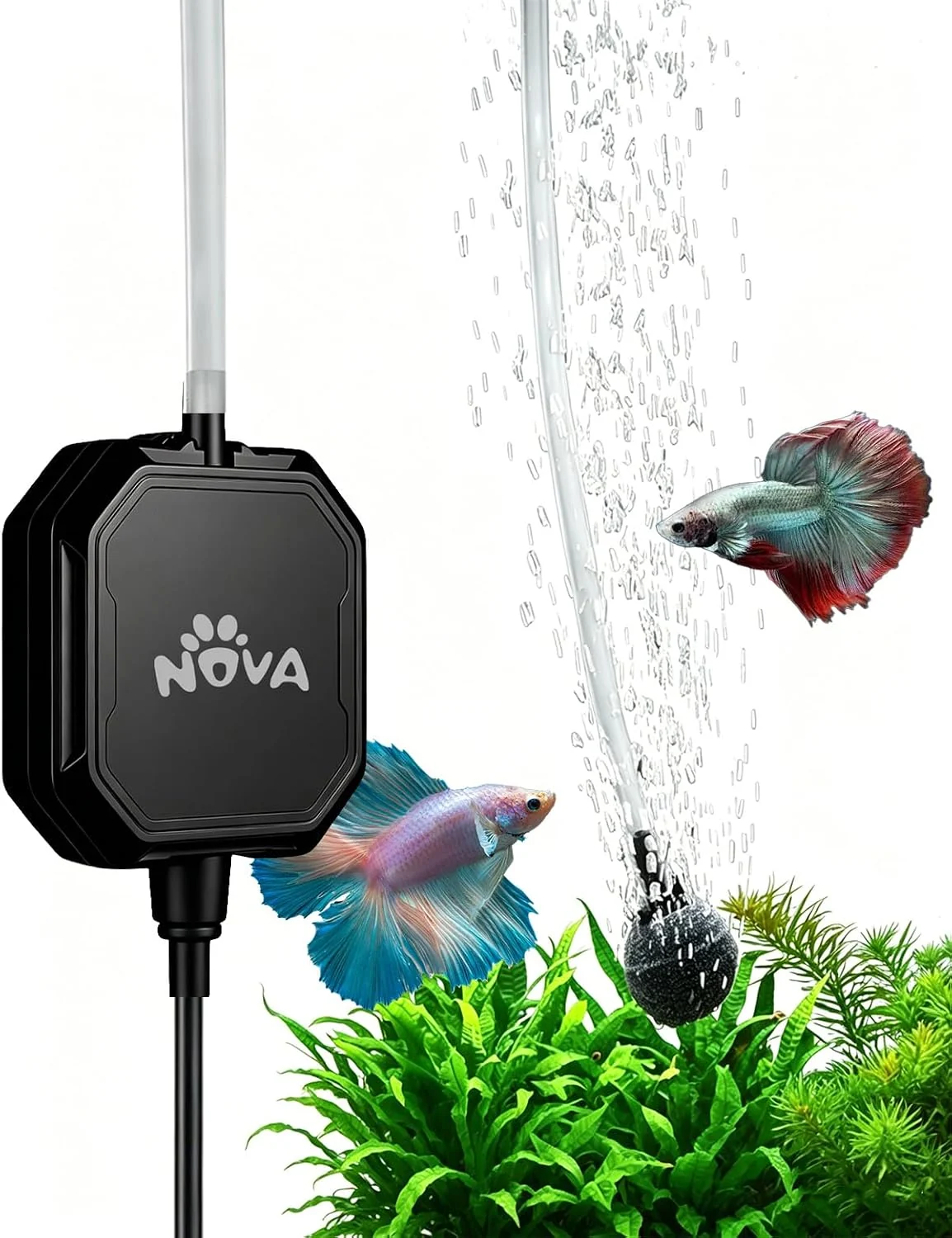
For your first freshwater fish aquarium, prepare the basic care equipment before bringing fish home. This checklist separates the essentials from items that depend on your setup. It is intended for a conventional filtered freshwater tank, not a reef or advanced aquascape.
Plan around the fish first
Choose fish with compatible adult sizes, behavior and water requirements, then select a suitable tank. Allow for their space and social needs rather than choosing by how many small fish fit today. Species have different needs, so research your planned fish before purchasing — see the RSPCA’s guide to keeping fish as pets ↗.
Prepare these before adding fish
| Item | What to check |
|---|---|
| Tank and suitable stand | Enough space for the adult fish. Use a level support rated for the filled aquarium and install it as the tank manufacturer specifies. |
| Secure lid or cover | Suited to your fish and equipment; helps prevent jumping and reduces evaporation. Leave the required ventilation and cable access. |
| Filter and filter media | Appropriate capacity, biological media and a flow pattern the fish can tolerate. Confirm replacement media availability. An air-driven filter also needs a suitable air pump. |
| Thermometer | An easy-to-read temperature check, separate from the heater’s setting dial. |
| Water conditioner for treated tap water | A product that handles the disinfectants in your supply, including chloramine when present. Follow its dosing directions; leaving water standing is not a dependable chloramine treatment. |
| Water tests | Include ammonia, nitrite, nitrate, phosphate and pH. Some multi-test strips omit ammonia, so check the contents. Add GH and KH tests when relevant to your water and livestock. |
| Siphon and dedicated bucket | For controlled partial water changes and appropriate substrate cleaning. Keep aquarium tools free of soap and household chemical residue. |
| Suitable food and handling tools | Food matched to the fish, a suitable net or transfer container, and a glass or acrylic-safe algae cleaner. |
| Shelter and suitable tank furnishings | Provide cover appropriate to your fish. Choose smooth, aquarium-safe items; select substrate for the livestock and plants you intend to keep. |
Choose these for your specific setup
| Item | When it is needed |
|---|---|
| Adjustable heater | When room conditions cannot reliably maintain your fish’s required temperature. Most tropical setups need one. Size it for tank volume and the room-to-water temperature difference. |
| Aquarium light and timer | Choose for the tank’s use. Live plants need appropriate light; a viewing-only tank may use a simpler fixture. Maintain a consistent day and a dark night. |
| Air pump and air stone | Required for air-driven equipment or useful when additional gas exchange is needed. Not every tank needs a separate air stone if surface movement and oxygen supply are adequate. |
| Airline and check valve | For an air system, use compatible tubing and install backflow protection in the correct direction as the equipment instructions require. |
| Plant supplies | Fertilizer, planting tools and suitable substrate depend on the plants. CO₂ injection is useful for some goals but is not a universal beginner requirement. |
Items you can usually leave until later
An automatic feeder, dosing pump, UV sterilizer and app-connected controller are not prerequisites for a basic freshwater aquarium. Add them when they solve a specific problem. Consider backup aeration if power outages are a realistic concern; it does not replace a functioning biological filter.
A new filter needs time to become biologically ready
Installing equipment does not make a tank ready for fish. Beneficial microorganisms develop on filter media and other surfaces and process ammonia into nitrite and then nitrate. Ammonia and nitrite can harm fish.
Use a documented fishless cycling method with a controlled ammonia source and regular testing before stocking. Confirm that the system processes that source according to the method’s completion criteria. Clear water, a fixed number of days, or zero readings in an empty tank without an ammonia source do not prove the cycle is complete. Add livestock gradually and keep testing.
Check the setup before bringing fish home
- The tank is supported correctly, leak-free, and maintains the intended temperature; filtration operates reliably.
- The biological cycle has been verified, and measured water conditions suit the selected fish.
- Electrical connections stay dry, cords have drip loops, and equipment follows its installation and electrical-safety requirements.
- You have water-change supplies and a feeding and maintenance routine. Preserve biological media; avoid replacing all of it at once as routine cleaning.